What Are The Key Differences Between Solar And Traditional Lighting? This question now matters beyond energy bills. It affects street safety, public-space visibility, maintenance schedules, and long-term resilience. Solar lighting stores daytime sunlight in batteries, while traditional systems usually depend on grid electricity, fixed wiring, and central infrastructure. The difference becomes visible at dusk: one pole may dim after several cloudy nights, while another remains stable but keeps drawing power.
The International Energy Agency’s Renewables 2024 report identifies solar photovoltaic power as the fastest-growing electricity source worldwide. The U.S. Department of Energy also reports that modern LED systems can achieve far higher efficacy than older fluorescent and high-intensity discharge technologies. However, efficiency alone does not settle the decision. Battery replacement, winter sunlight, pole spacing, glare control, trenching, tariffs, and emergency operation can change the real cost. Small details matter.
Lighting researcher Dr. Jennifer Veitch has written, “Light is not just a physical stimulus; it is also a perceptual experience.” Her point is useful here. A brighter fixture is not automatically a better fixture. Solar systems can reduce trenching and support remote locations, yet their batteries may require careful thermal design. Grid-connected lighting offers predictable output, but outages and rising electricity prices remain practical concerns. The World Bank’s Lighting Global program has repeatedly highlighted the importance of product quality, durability, and verified performance in off-grid markets. Some comparisons still oversimplify cloudy climates. That deserves more scrutiny. This guide examines performance, installation, environmental impact, maintenance, and total ownership cost before choosing either approach.
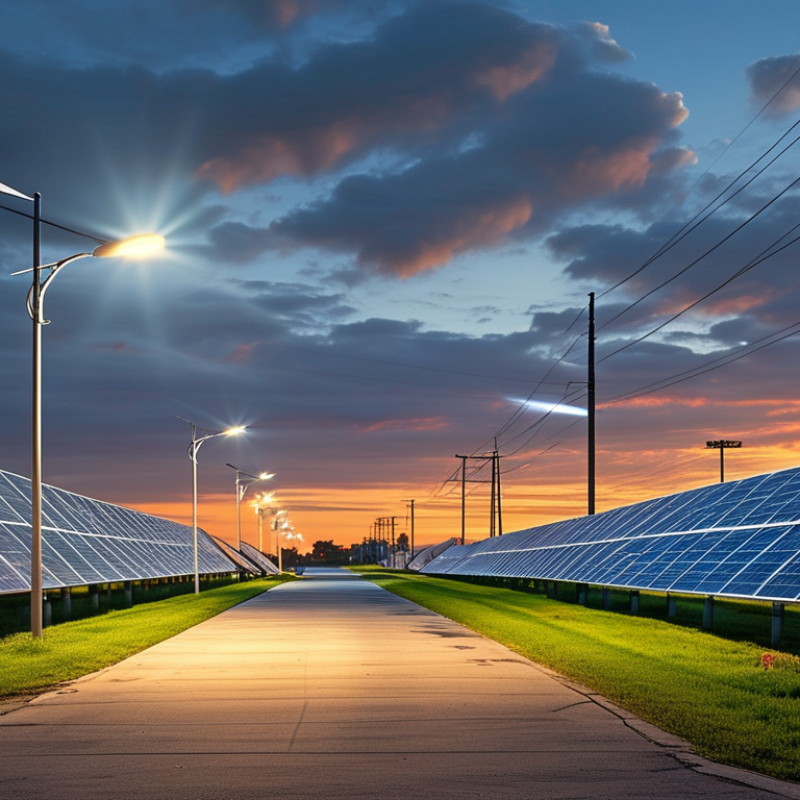
Solar PV-battery lighting uses sunlight as its primary energy source. A photovoltaic panel converts sunlight into electricity during the day. A charge controller manages that electricity before it reaches the battery. The stored power then runs an LED fixture after sunset. This scope includes the panel, battery, controller, luminaire, wiring, sensors, and mounting structure. It usually serves remote paths, gardens, parking areas, and locations without dependable utility access.
Traditional grid lighting receives electricity through a utility network. Its scope includes distribution lines, poles, switches, meters, underground cables, and building connections. The fixture operates when power is available, often without local energy storage. Grid systems can deliver steady output, but installation may require trenching and electrical permits. A damaged cable can affect several lights at once.
The practical difference is more than energy source. Solar performance depends on panel angle, shade, weather, battery temperature, and nighttime demand. A small panel may charge slowly after several cloudy days. It is not automatic. Grid lighting depends less on daily weather, yet monthly energy use and network maintenance remain important. In field planning, I would inspect winter shadows, measure required illumination, and check battery replacement access. A system may appear efficient on paper but disappoint users when trees grow nearby. That weakness deserves honest review. Lighting standards, electrical safety rules, and local installation requirements should guide the final design.
In 2026, lighting remains a major energy issue. The International Energy Agency estimates that lighting uses about 15% of global electricity. That figure includes homes, offices, streets, warehouses, and public facilities. Small efficiency gains can therefore create measurable national savings.
Traditional grid lighting receives steady electricity through established networks. It usually provides reliable brightness, but long cables, peak demand, and fossil-fuel generation can increase its environmental cost. Solar lighting produces power at the point of use. Panels charge batteries during daylight, then support lamps after sunset. This reduces grid demand, especially in remote roads and outdoor areas. However, battery replacement, cloudy weather, winter daylight, and panel cleaning require careful planning. Solar is not automatically maintenance-free.
A practical comparison should measure more than the lamp’s purchase price. Engineers should record nightly operating hours, local sunlight, battery capacity, brightness requirements, and expected service life. Lifecycle analysis also matters because manufacturing panels, batteries, poles, and wiring consumes materials and energy. The difference is visible. A solar unit may cut electricity use, while a traditional system may offer stronger performance during prolonged storms. My own early comparisons treated solar as a complete answer. That assumption fails when batteries are undersized or poorly maintained. Reliable decisions need measured site data, transparent calculations, and realistic replacement schedules.
2026 Best Solar vs Traditional Lighting Key Differences?
Solar lighting often combines photovoltaic panels, batteries, controls, and LEDs. Its strongest efficiency advantage comes from the LED, not sunlight alone. The U.S. Department of Energy reports that LEDs use at least 75% less energy and last up to 25 times longer than incandescent bulbs. That changes maintenance planning: fewer ladder visits, fewer replacements, and less material waste.
The number is powerful, but not complete. Solar systems still lose energy during charging, storage, and conversion. The National Renewable Energy Laboratory explains that photovoltaic output changes with sunlight, temperature, shading, panel angle, and weather. A shaded panel can leave a pathway dark before dawn. Battery age matters too. Real sites are messier.
Traditional grid-connected lighting offers steadier nighttime output, especially in cloudy regions. However, its electricity demand continues whenever fixtures operate. The U.S. Energy Information Administration identifies lighting as a meaningful component of commercial electricity use, making efficiency upgrades financially relevant. A practical comparison should measure operating hours, local solar exposure, battery replacement cycles, and installation labor.
Designers should also examine light distribution, glare, and nighttime safety. A brighter fixture is not automatically better. Poor aiming can waste energy while creating dark gaps. In my assessment, solar lighting performs best on remote paths, gardens, and areas where trenching is expensive. Grid-powered LEDs may remain more dependable for dense urban streets. That distinction deserves more attention.
Efficiency benchmark based on an equivalent 800-lumen light source. LED lighting uses approximately 75% less electricity and lasts up to 25 times longer than traditional incandescent lighting. Solar-powered LED systems can use zero grid electricity during operation, although actual performance depends on sunlight, battery capacity, and system design.
The energy values show grid electricity used during operation. The service-life comparison represents the light-emitting component; solar system components such as batteries and photovoltaic panels have separate replacement cycles.
Solar lighting shifts spending from monthly electricity bills to panels, batteries, controllers, and installation. The U.S. National Renewable Energy Laboratory reports that utility-scale solar costs can reach roughly $24–$75 per megawatt-hour in its 2024 cost projections. This is not a direct lighting price, but it helps explain solar’s long-term energy advantage. Traditional grid lighting usually needs less upfront equipment. However, it remains exposed to rising tariffs and connection charges.
Batteries decide whether solar lighting is genuinely reliable. A cloudy winter night can reduce runtime sharply. Battery losses also matter; practical round-trip efficiency often falls near 80–95%, depending on temperature, age, and charging conditions. The International Energy Agency’s Batteries and Secure Energy Transitions report identifies storage durability, mineral supply, and replacement cost as major economic concerns. Small systems may require battery replacement before their panels fail. That weakens simple payback claims.
Traditional lighting offers predictable runtime when the grid is stable. Maintenance then depends mainly on lamp life, wiring, and access to fixtures. Solar systems avoid trenching and utility outages, but dirty panels, water ingress, and weak batteries create hidden service work. NREL’s 2024 photovoltaic degradation research commonly places module degradation near 0.5% annually. That is reassuring, not flawless. In real projects, poor orientation or neglected batteries can erase the expected LCOE benefit. My practical view is cautious: compare ten-year energy use, battery replacements, outage hours, and technician visits, not equipment price alone.
2026 Selection Matrix: Match Lux, Climate, Grid Access, and CO₂ Goals
Start with the required lux level, not the fixture type. CIE 115:2010 recommends different lighting classes for roads, paths, and conflict areas. A solar unit may provide enough light at midnight, yet fail after several cloudy days. Grid lighting offers steadier output when reliable electricity exists. Measure maintained lux, glare, uniformity, and operating hours.
Climate changes the decision. In hot regions, battery aging and panel temperature can reduce nighttime reserves. Cold climates can limit battery charging and capacity. Dusty sites also need realistic cleaning schedules. The International Energy Agency reports that lighting represents about 15% of global electricity use. Efficient LEDs reduce demand, but controls and maintenance still matter. Small details matter.
For weak-grid or remote sites, compare solar storage autonomy against outage frequency. A three-night reserve may be sensible, but local weather data should verify it. For connected streets, traditional grid lighting can be simpler where poles and service already exist. CO₂ targets require lifecycle accounting. IPCC AR6 WGIII reports median lifecycle emissions near 48 gCO₂e/kWh for utility-scale solar, compared with about 820 for coal and 490 for gas. Battery manufacturing and replacement can narrow that advantage. The matrix is not perfect. I would revisit it after one wet season, because projected performance often looks better than field performance.
| Decision Dimension | Solar LED Lighting | Traditional Grid-Connected Lighting | 2026 Selection Guidance |
|---|---|---|---|
| Typical system architecture | LED luminaire, photovoltaic module, charge controller, rechargeable battery, pole or mounting structure, and optional remote monitoring. | LED or other electric light source connected to the utility grid through cabling, distribution equipment, controls, and protective devices. | Solar reduces dependence on distribution wiring but adds on-site generation and energy-storage components. |
| Recommended illuminance target | Common outdoor design starting points: approximately 3–10 lux for low-use paths, 5–15 lux for local roads, and 10–30 lux for public areas or parking zones, subject to local standards. | Can be designed for the same illuminance targets. Higher or continuous output is generally easier where grid capacity is available. | Choose the target from the site function, pedestrian and vehicle activity, uniformity, glare limits, and applicable regulations—not from lamp wattage alone. |
| Light output and efficacy | Modern outdoor LED systems commonly achieve approximately 80–180 lumens per watt at the LED or luminaire level, with output often reduced or dimmed during low-traffic hours. | Modern grid-connected LED systems commonly achieve approximately 80–180 lumens per watt. Older high-pressure sodium systems typically provide lower color quality and may require warm-up and replacement of lamps. | Compare delivered lumens, optical distribution, maintained illuminance, and uniformity. Rated lumens alone do not confirm roadway performance. |
| Nightly operating profile | Typically programmed for dusk-to-dawn operation with adaptive dimming, for example 100% output during peak hours and 20–70% output during lower-use periods. | Can provide stable dusk-to-dawn operation, scheduled dimming, motion-based control, or centralized management when compatible controls are installed. | Solar is most attractive when the required profile is predictable and dimming can reduce overnight energy demand. |
| Grid access | Strong fit Suitable for remote roads, parks, construction areas, campuses, and sites where trenching or new utility connections are expensive. |
Conditional Suitable where reliable low-voltage or medium-voltage service is already nearby and connection capacity is available. |
For a new grid connection, compare the full installed cost of trenching, cabling, distribution equipment, permits, and service charges against the solar system. |
| Solar resource requirement | Requires adequate annual and seasonal solar resource. A preliminary design commonly uses local peak-sun-hour data, winter irradiance, shading analysis, and battery autonomy calculations. | Does not depend on local sunlight for operation, although grid generation may still include renewable or fossil energy sources. | Solar is less suitable where modules are heavily shaded, snow-covered for long periods, or poorly oriented. Use winter solar data rather than annual averages alone. |
| Battery autonomy | Common preliminary design range: approximately 2–5 nights of autonomy, depending on climate, criticality, dimming profile, and acceptable outage risk. | Normally no local lighting battery is required for routine operation; backup power may still be required for emergency or critical installations. | Use more autonomy for critical routes and cloudy or snowy climates, but recognize that larger batteries increase cost, weight, embodied carbon, and replacement requirements. |
| Climate: high solar exposure | Recommended Strong potential when shading is limited and high solar exposure supports reliable seasonal charging. |
Viable Reliable where grid infrastructure is available, but it does not capture the site’s solar resource directly. |
Prioritize solar after checking heat derating, ultraviolet exposure, dust, battery temperature, and cleaning requirements. |
| Climate: cloudy or high-latitude locations | Requires design review May need larger photovoltaic capacity, higher battery autonomy, lower overnight output, or hybrid backup. |
Recommended Usually offers more predictable lighting availability if the electrical grid is reliable. |
Use monthly irradiance, worst-season load, snow losses, and outage history. Do not size solar from average annual sunlight alone. |
| Climate: hot environments | High ambient temperature can reduce battery life and photovoltaic output. Battery enclosure ventilation, thermal protection, and temperature-compensated charging are important. | LED lifetime is also affected by heat, but the system normally avoids local battery thermal constraints. | For solar, specify battery chemistry and enclosure design for the actual temperature range. Avoid placing batteries in unventilated heat traps. |
| Climate: cold, snow, or ice | Battery capacity and charging performance can fall at low temperatures. Snow accumulation, icing, and reduced winter sunlight may require extra design margin. | Grid-connected equipment can also be exposed to cold and ice, but energy availability is not directly tied to panel charging. | Consider low-temperature charging limits, battery heating where justified, panel tilt, snow shedding, and winter maintenance access. |
| Rain, dust, and corrosion | Requires weather-resistant luminaires, sealed electrical enclosures, corrosion-resistant hardware, and periodic module cleaning in dusty locations. | Requires weather-resistant luminaires and electrical equipment; underground cables and connection points also need appropriate protection. | Specify ingress protection, corrosion category, wind loading, drainage, and cleaning access according to the site environment. |
| Installation disruption | Usually low trenching requirement; installation may be faster where poles can be placed without major underground electrical works. | May require trenching, duct banks, cable installation, utility coordination, road crossing, and reinstatement of finished surfaces. | Solar gains an advantage on remote or landscaped sites where civil works dominate the project cost and schedule. |
| Energy consumption | Operational electricity is generated on site. Energy use is limited by the LED load, control profile, conversion losses, and battery charging efficiency. | Electricity is drawn from the grid. A representative LED luminaire operating at 50 W for 12 hours per night uses about 219 kWh per year before control and driver losses. | Calculate annual energy from actual wattage, operating hours, dimming schedule, standby consumption, and system losses. |
| Operational CO₂ emissions | Near-zero operational emissions at the point of use, but photovoltaic modules, batteries, electronics, transport, and replacements have embodied emissions. | Operational emissions depend on the electricity mix. At an assumed grid factor of 0.40 kg CO₂e per kWh, a 50 W luminaire operating 12 hours nightly uses about 219 kWh annually and produces approximately 88 kg CO₂e per year. | For a credible carbon comparison, use the local or contractual grid-emission factor and include embodied emissions, battery replacement, recycling, and end-of-life treatment. |
| CO₂ reduction potential | Often favorable where it displaces new grid infrastructure or fossil-intensive electricity, especially with effective dimming and long service life. | Can achieve low operational emissions when supplied by a low-carbon grid or renewable electricity, without requiring a local battery for routine operation. | Solar is not automatically lower-carbon in every case; compare life-cycle emissions, battery size, replacement interval, grid factor, and expected service life. |
| Reliability during grid outages | Independent operation Can continue operating during grid outages if the battery has sufficient stored energy and the system is not damaged. |
Grid dependent Requires emergency power, battery backup, or a generator to maintain lighting during outages. |
For evacuation routes, security areas, and critical access roads, evaluate outage duration and required maintained illuminance—not only normal operation. |
| Maintenance profile | Includes luminaire cleaning, module cleaning where needed, battery health checks, controller checks, structural inspection, and eventual battery replacement. | Includes luminaire cleaning, electrical inspections, cable and connection checks, control-system maintenance, and LED driver or luminaire replacement. | Solar generally shifts maintenance from underground electrical infrastructure toward visible equipment and battery management. |
| Battery replacement planning | Battery service life varies with chemistry, temperature, depth of discharge, charging control, and cycling. Replacement planning is commonly required within the project life. | No routine lighting battery replacement is required unless backup power or emergency lighting is included. | Include battery replacement cost, access method, safe handling, recycling route, and expected performance degradation in the life-cycle budget. |
| Control and smart-management capability | Can use astronomical timers, photocells, motion sensors, adaptive dimming, and wireless monitoring, subject to energy and communications availability. | Can use photocells, central management systems, traffic-responsive dimming, network controls, and utility-compatible monitoring. | Choose controls that reduce energy without compromising uniformity, safety, accessibility, or minimum required illuminance. |
| Best-fit project conditions | Best fit Remote sites, new developments without nearby grid service, linear infrastructure, low-to-moderate lighting loads, resilience-focused projects, and strong solar conditions. |
Best fit Dense urban areas, high and continuous lighting loads, locations with reliable nearby grid capacity, heavily shaded sites, and projects requiring constant high output. |
Use a hybrid system when grid access exists but resilience, peak-load reduction, or renewable-energy targets justify local generation and storage. |
| Primary decision rule | Prefer when grid extension is costly, solar resource is adequate, the lighting load is moderate, and resilience or operational CO₂ reduction is a priority. | Prefer when grid service is already available, the site requires high or highly predictable output, and battery maintenance or winter solar risk is unacceptable. | Make the final choice using a life-cycle comparison covering capital cost, civil works, energy, maintenance, replacements, reliability, safety, and CO₂e. |
: A photovoltaic panel captures sunlight during the day. A controller manages charging. The battery powers an LED fixture after sunset. Sensors, wiring, and mounting hardware complete the system.
Grid lighting receives electricity through utility lines, poles, cables, switches, and meters. The fixture usually works without local battery storage. A damaged cable may affect several lights together.
Grid lighting usually provides steadier output during cloudy periods. Solar lighting depends on sunlight, panel angle, shade, temperature, and battery condition. Several cloudy days can reduce brightness before dawn.
Solar lighting suits remote paths, gardens, parking areas, and weak-grid locations. It can avoid expensive trenching and utility connections. Access matters greatly.
Grid lighting may suit dense urban streets with existing poles and reliable electricity. It normally offers consistent nighttime operation. Monthly energy costs remain important.
Not always. LEDs use far less energy than older bulbs and can last much longer. However, solar systems lose energy during charging, storage, and conversion. Real performance depends on the complete design.
Inspect winter shadows, tree growth, dust, heat, cold, and panel exposure. A nearby tree may gradually block sunlight. Battery temperature can also reduce available nighttime power.
A three-night reserve may work in some locations. Local rainfall and sunlight records should confirm that assumption. The correct reserve depends on demand, climate, and required lighting hours.
Measure maintained lux, glare, uniformity, operating hours, outages, labor, and battery replacement cycles. A brighter fixture is not automatically safer. Poor aiming can create glare and dark gaps.
Yes. A system may disappoint after cloudy weather, battery aging, or tree growth. I would review performance after one wet season. Predictions are useful, but field evidence matters more.
What Are The Key Differences Between Solar And Traditional Lighting? In 2026, the main distinction is how each system generates, stores, and delivers electricity. Solar lighting combines photovoltaic panels with batteries to operate independently from the grid, while traditional lighting depends on continuous grid power. Since lighting consumes about 15% of global electricity, efficiency is a major consideration. LED technology can reduce energy use by approximately 75% and last up to 25 times longer than older lighting technologies, benefiting both systems.
A practical comparison should also examine levelized cost of electricity, battery replacement, expected runtime, installation, and maintenance. Solar systems may offer lower operating emissions and greater value in areas with limited grid access, but performance depends on sunlight, climate, battery capacity, and seasonal conditions. Traditional lighting generally provides stable runtime and simpler maintenance where reliable grid service exists. The best 2026 choice should match required lux levels, local climate, grid availability, budget, and CO₂ reduction objectives.

SWF Lights