How to Choose the Best Solar Lighting Options for Your Garden?

Time:2026-06-07 Author:Henry
0%

Choosing the right solar lighting for your garden can feel overwhelming. Many options exist, but what truly works best? According to solar lighting expert, John Green, “The best solar lights combine efficiency and aesthetics.” His insights reflect the importance of blending functionality with beauty.

When considering what are the best solar lighting options for gardens, evaluate your space. Each garden has a unique layout. A well-lit path enhances safety and highlights beautiful plants. Use lights that complement your garden's design. Focus on solar fixtures that match the overall theme.

Sometimes, it’s not just about brightness. Select lights that create ambiance. Think of soft glows and subtle highlights. Additionally, consider durability. Not all solar lights withstand weather changes. Thus, research brands with proven reliability. Remember, this is an investment in your garden's charm and practicality. Find the right balance, and your outdoor space will shine.
How to Choose the Best Solar Lighting Options for Your Garden?

Understanding Different Types of Solar Lighting for Gardens

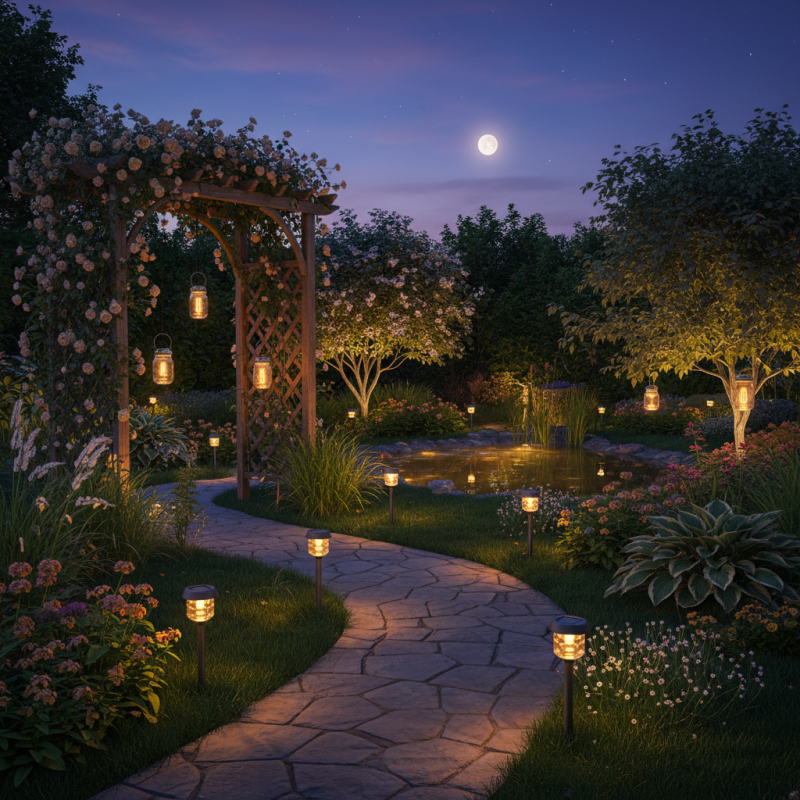
Solar lighting options for gardens have gained popularity due to their eco-friendliness and efficiency. Understanding the different types is key to making the right choice for your outdoor space. Path lights, for instance, are typically low to the ground and designed to illuminate walkways. They can enhance safety while providing a pleasing aesthetic. According to a recent report from the Solar Energy Industries Association, the use of solar path lights has increased by 45% over the past three years.

Spotlights and flood lights serve different purposes. Spotlights focus light on a specific area, perfect for highlighting plants or sculptures. Flood lights provide broader coverage, useful for illuminating larger sections of your garden. Many homeowners prefer solar uplights for trees or architectural features, which can create dramatic effects at night. A study suggested that gardens with adequate lighting see 30% more evening use, indicating the impact of visual appeal and accessibility.

However, it’s essential to consider factors like battery life and solar panel efficiency. Not all solar lights perform equally, especially in shaded areas. Poor quality solar lights may not hold a charge for long or may fail in adverse weather conditions. Choosing the right material—like weather-resistant plastics or metals—can significantly enhance durability. Striving for a combination of aesthetics and functionality requires careful thought and ongoing assessment of your garden's lighting needs.

Assessing Your Garden's Lighting Needs and Aesthetics

When assessing your garden's lighting needs, consider both functionality and aesthetics. Garden lighting serves practical purposes like safety and navigation. Research indicates that well-lit pathways can reduce accidents by up to 60%. Ensure that your lighting enhances visibility while using fixtures that blend with your garden's design.

Next, think about how the lighting will affect your garden’s ambiance. Aesthetic appeal is crucial, impacting how you interact with your space. Numerous studies suggest that the right lighting can elevate a garden’s perceived value. Soft, warm lights create inviting atmospheres. In contrast, bright white lights can feel harsh and unwelcoming.

Also, it's essential to reflect on energy efficiency. Solar lights are popular choices due to low operational costs. According to industry reports, homeowners can save up to 80% on electricity bills with solar options. However, not all solar lights are equally effective. When selecting, consider the sun exposure in your garden. Locations with limited sunlight may require lights with larger batteries or additional charging options.

Evaluating Brightness and Battery Life of Solar Lights

When choosing solar lights for your garden, evaluating brightness and battery life is essential. Brightness is usually measured in lumens. Higher lumen output means a brighter light. For pathway lighting, aim for 100-200 lumens per fixture. For larger areas, consider options exceeding 300 lumens.

Battery life significantly impacts the performance of solar lights. Most solar lights charge during the day and operate at night. Look for models that can last at least 8-10 hours on a full charge. Nighttime illumination is critical, especially for security. Some lights may perform well initially but degrade quickly.

Tips: Check reviews on battery longevity. It can vary with temperature and usage. Consider solar lights with replaceable batteries for longer life. Test your lights in different conditions to find the best placement. Look for designs that blend seamlessly into your garden. This will enhance aesthetics while providing light.

Evaluating Brightness and Battery Life of Solar Lights

Choosing High-Quality Materials and Weather Resistance

When selecting solar lighting for your garden, the quality of materials matters immensely. High-quality solar lights typically use durable plastics or metals that resist corrosion. Cheaper options may look similar but often have poor weather resistance. Rain, wind, and temperature fluctuations can quickly degrade subpar materials, leaving you with non-functional lights.


Weather-resistant features are crucial for longevity. Look for solar lights designed to handle heavy rain or extreme sun exposure. Some options come with protective coatings that enhance durability. Pay attention to the battery life as well. A good lithium-ion battery will typically withstand temperature changes better than standard versions.


While aesthetics are important, prioritize durability. In some cases, it may be tempting to choose the cheaper option, but long-term savings come from investing in reliable lights. Reflect on how you can enhance your garden’s beauty while ensuring your lighting lasts through various seasons. Don't overlook this vital aspect; it can make a significant difference.

Comparing Cost and Long-Term Benefits of Solar Lighting Options

When evaluating solar lighting for your garden, cost and long-term benefits are critical. Initial costs for solar lights may seem high, but they often lead to significant savings. Once installed, they require no additional electricity. This can result in lower energy bills over time. Maintenance costs are usually minimal too.

The durability of solar lights is another benefit. Many are designed to withstand various weather conditions. This increases their lifespan and further reduces long-term expenses. However, not every solar light performs equally. Some may lose brightness or efficiency faster than others. It's essential to research materials and reviews when selecting.

Consider your garden's specific needs. Lighting placement affects how well these lights work. The right locations can maximize sunlight exposure during the day. But getting enough sunlight can be challenging in shaded areas. Reflecting on your garden's layout may reveal areas needing improvement. Balancing cost with performance can lead to better choices for your outdoor spaces.

FAQS

: What are the common types of solar lighting for gardens?

: Common types include path lights, spotlights, flood lights, and uplights. Each serves different purposes in illuminating your garden.

Why are solar path lights popular?

They enhance safety on walkways and create a pleasing aesthetic. Their use has surged in recent years.

How do spotlights differ from flood lights?

Spotlights focus light on specific areas, while flood lights cover larger sections. They cater to different lighting needs.

What affects the performance of solar lights?

Battery life and solar panel efficiency are crucial. Shaded areas can hinder performance significantly.

How can I ensure the durability of solar lights?

Choosing materials like weather-resistant plastics or metals can enhance durability. This is key for long-term use.

Are there long-term savings with solar lighting?

Yes, they require no electricity after installation, leading to lower energy bills. Maintenance costs are also minimal.

What should I consider when placing solar lights?

Placement affects performance. Proper locations maximize sunlight exposure, especially in areas that receive less sunlight.

Do all solar lights have the same lifespan?

No, some may lose brightness or efficiency faster. Researching products is essential for a good selection.

How can I assess my garden's lighting needs?

Reflect on your garden layout. Identifying shaded areas can help improve lighting placement and effectiveness.

Is it important to balance cost and performance?

Yes, considering both can lead to better choices. Strive for a mix of aesthetics, functionality, and affordability.

Conclusion

When considering what are the best solar lighting options for gardens, it's essential to understand the various types available, such as path lights, spotlights, and string lights. Each type serves different purposes and can enhance the overall aesthetics of your garden. Assessing your specific lighting needs involves determining areas that require illumination and how the lights will complement your garden’s design.

Evaluating the brightness and battery life of solar lights is crucial, as it impacts their efficiency and performance during nighttime. Additionally, selecting high-quality materials that offer weather resistance ensures durability against the elements. Lastly, comparing the cost and long-term benefits of different solar lighting options will help you make an informed decision, balancing initial investment with potential energy savings. Ultimately, choosing the right solar lighting can greatly enhance the beauty and functionality of your outdoor space.

Henry

Henry

Henry is a dedicated marketing professional with a profound expertise in the company's offerings. With years of experience in the industry, he possesses an impressive understanding of the market dynamics and consumer behaviors that drive success. Henry is committed to sharing his insights through......