How to Find the Latest Trends in Solar Lighting Technology

Time:2026-11-12 Author:Isabella
0%

What Are The Latest Trends In Solar Lighting Technology is a practical question for anyone choosing lights for a path, parking area, or remote site. The answer is changing quickly, but a brighter specification alone does not guarantee a better installation. Panel placement, battery capacity, shade, and winter daylight all affect performance. Small details matter.

Thomas Edison, an influential inventor and energy pioneer, is often credited with saying, “We are like tenant farmers chopping down the fence around our house for fuel when we should be using Nature’s inexhaustible sources of energy—sun, wind and tide.” His words predate modern solar lighting, so they are not a technical forecast. They do capture the enduring appeal of using sunlight as a local energy source.

This guide examines trends that buyers can assess in real products: higher-efficiency LED fixtures, compact photovoltaic panels, longer-lasting battery systems, and controls that adjust brightness when spaces are empty. It also looks at connected monitoring, which can help operators spot faults before a dark walkway becomes a problem. Yet smart features are not automatically useful. They need reliable connectivity, clear maintenance plans, and a real purpose.

The sections ahead compare these developments with practical constraints, including cloudy weather, tree cover, glare, and replacement costs. Product claims deserve careful checking against independent test data and site conditions. A promising technology can still disappoint when poorly matched to its location. That is worth remembering.
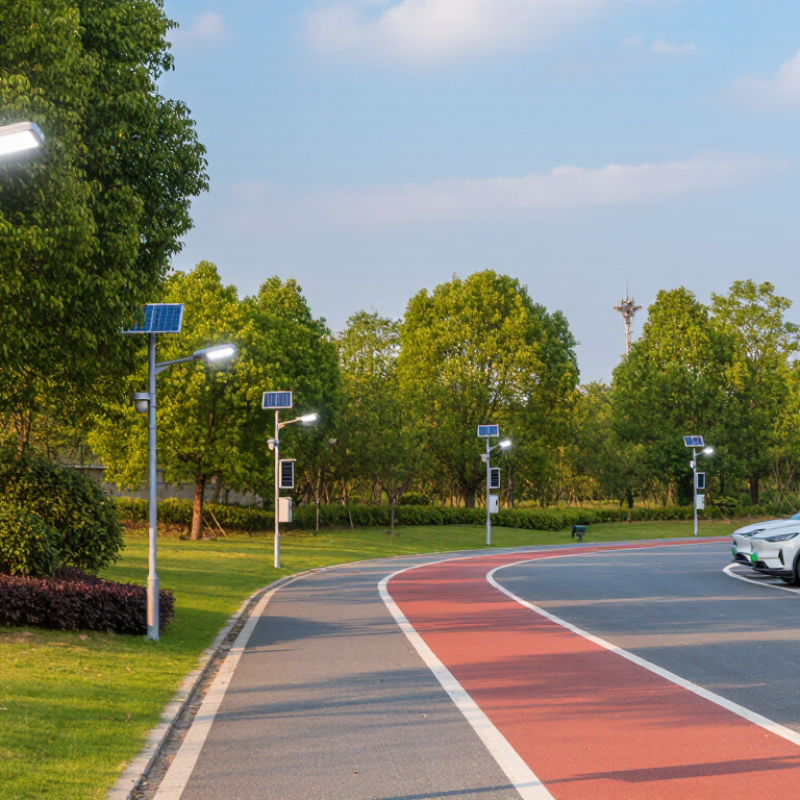
How to Find the Latest Trends in Solar Lighting Technology

Understanding the Current Solar Lighting Technology Landscape

Solar lighting is shifting from simple panel-and-lamp kits toward systems that manage energy more carefully. Efficient LEDs need less power, while improved photovoltaic cells can collect useful energy in limited space. Battery capacity still sets the practical limits. A cloudy week can expose them.

Many newer designs use charge controllers that adjust charging and protect batteries from deep discharge. Motion sensors and adaptive dimming help preserve stored energy when streets are quiet. Some connected systems report battery condition and lamp performance remotely, though connectivity adds cost and may not suit every site. The technology is not equally mature everywhere.

For a useful comparison, look beyond brightness claims. Check how a unit performs after several overcast days, whether its battery can be replaced, and how fixtures resist heat, moisture, and dust. Field tests matter. A specification sheet rarely shows every weakness. Even monitoring data can be incomplete if sensors drift or maintenance records are patchy. That gap deserves attention: a highly efficient lamp is not automatically the most dependable choice for a particular climate or installation.

Identifying Reliable Sources for Emerging Solar Lighting Trends

Reliable trend research starts with source quality, not striking product photos. Check government energy agencies, university research groups, peer-reviewed journals, and recognized lighting or electrical standards organizations. These sources often explain test conditions and limitations, not just headline performance. Compare reported brightness with panel size, battery capacity, and operating hours. A glowing sample at dusk reveals little about performance after several cloudy days.

When a new feature appears in several articles, trace the claim to its original test or technical report. Look for the test date, location, weather conditions, and measurement method. Check whether results describe a laboratory prototype or a product tested outdoors. I used to treat every new feature as a breakthrough. That was too generous. Some reports omit long-term battery aging, so note what remains untested. Reliable sources can still have gaps.

Tips: Save the source and its publication date. Compare claims across at least two independent sources, and check whether they use the same measurements. If numbers conflict, pause before calling it a trend. A small spreadsheet helps: record efficiency, runtime, test conditions, and unanswered questions.

How to Find the Latest Trends in Solar Lighting Technology - Identifying Reliable Sources for Emerging Solar Lighting Trends

Trend to Track What the Evidence Indicates Reliable Sources to Consult How to Verify a Trend
Higher-efficiency photovoltaic modules Research continues on cell designs that convert more sunlight into electricity. Bifacial modules can collect light on both sides; their additional energy yield depends on factors such as ground reflectivity, mounting height, and system layout. Peer-reviewed photovoltaic research, public laboratory reports, and independent module-test results. Check whether results specify test conditions, module type, installation geometry, and measured energy yield—not just peak efficiency.
Perovskite–silicon tandem cells Tandem cells combine light-absorbing layers to capture a broader portion of the solar spectrum. They are an active research area, while long-term stability, large-scale manufacturing, and field performance remain important questions. Peer-reviewed materials and energy journals, conference proceedings, and independent durability studies. Separate laboratory efficiency records from independently verified production modules and long-duration outdoor testing.
Adaptive LED lighting controls Dimming schedules, occupancy sensing, and daylight-responsive controls can reduce lighting energy use when full output is unnecessary. Performance varies with traffic patterns, sensor settings, local conditions, and maintenance. Independent field evaluations, public infrastructure studies, lighting research, and measurement-and-verification reports. Look for before-and-after energy measurements, lighting-level data, operating schedules, and a clear account of the baseline.
Battery chemistry and thermal management Battery choice affects usable storage, cycle life, cost, safety, and performance in hot or cold weather. Lithium-ion and lead-acid systems have different characteristics; performance depends on cell design, operating limits, and system controls. Peer-reviewed energy-storage studies, battery safety standards, public test reports, and documented field trials. Compare results at stated temperatures and discharge conditions; check cycle-life definitions, usable capacity, safety testing, and warranty assumptions.
Connected monitoring and predictive maintenance Remote monitoring can report system status, battery condition, and faults, helping operators identify maintenance needs. Connectivity is useful only when data are reliable, systems remain secure, and maintenance teams can act on alerts. Public pilot evaluations, technical standards, cybersecurity guidance, and independent reports on connected infrastructure. Check uptime, false-alarm rates, communications coverage, data ownership, security practices, and documented reductions in maintenance visits or outages.
Durability, repairability, and end-of-life planning Long service life depends on more than the solar module: batteries, seals, electronics, connectors, and installation quality also matter. Repairable components and planned battery replacement can affect whole-life cost and waste. Product safety and performance standards, lifecycle assessments, public procurement specifications, and documented long-term installations. Seek service-life assumptions, environmental test results, spare-parts availability, replacement procedures, and end-of-life or recycling provisions.
Source-quality check A trend is more credible when independent sources reach compatible conclusions and the evidence includes reproducible methods or real-world operating data. Peer-reviewed studies, public research institutions, standards documents, independent testing, and transparent public project evaluations. Record the publication date, author expertise, funding or conflicts of interest, sample size, test conditions, and whether findings have been independently repeated.

Tracking Advances in Panels, Batteries, Sensors, and Controls

How to Find the Latest Trends in Solar Lighting Technology

Tracking Advances in Panels, Batteries, Sensors, and Controls

Track solar-lighting advances as a system, not as isolated product claims. IEA PVPS estimated that about 447 GW of photovoltaic capacity was installed worldwide in 2023. That scale-up supports ongoing panel innovation, but large utility modules are not a direct guide to compact lighting panels. Compare efficiency, shading performance, and real-world output at the intended mounting angle.

Small details matter. A panel beneath tree branches may underperform even when its datasheet looks impressive.

Battery news needs the same scrutiny. BloombergNEF reported average lithium-ion battery pack prices of $139 per kilowatt-hour in 2023, a 14% year-over-year decline. That figure describes pack prices, not the cost or lifetime of a complete solar luminaire. Check usable capacity, cold-weather charging limits, and cycle-life test conditions.

For sensors and controls, look for adjustable dimming, motion detection, and clear descriptions of how long lights stay bright after activity. Ask how settings affect overnight autonomy.

I would not treat a laboratory rating as a winter guarantee. Field results depend on shade, temperature, installation, and maintenance, and published comparisons are not always apples to apples.

Comparing New Technologies by Performance and Durability

Compare solar lights under the same conditions: identical panel exposure, dusk-to-dawn schedules, and target brightness. Record initial and late-night illuminance, not just advertised lumens. The U.S. Department of Energy’s 2022 Solid-State Lighting R&D Opportunities report identifies efficacy and reliability as continuing development priorities. More lumens can help, but only if the battery sustains output after cloudy days. A bright first hour proves little.

Durability needs separate checks. NREL’s 2012 analytical review of photovoltaic degradation found a median module decline of about 0.5% per year. That figure describes PV modules, not complete outdoor fixtures. For a light, inspect battery cycle-life data, enclosure sealing, corrosion resistance, and performance after temperature cycling. Ask whether the battery can be replaced; otherwise, a sound panel may outlast the fixture. Small details matter. I would not treat laboratory ratings as field guarantees: dust, shade, and winter cold complicate the comparison. Real weather is messy.

How to Find the Latest Trends in Solar Lighting Technology

Comparing battery durability by typical charge-cycle life

Lithium iron phosphate (LFP) batteries generally offer the longest cycle life among these common options, making them a notable trend in solar lighting. Actual service life varies with temperature, depth of discharge, charging conditions, and product quality; cycle life is not the same as years of use.

Assessing Trends for Different Solar Lighting Applications

Solar-lighting trends look different across applications. A garden path needs even, low-glare light; a remote gate needs dependable sensing and several cloudy nights of reserve. Street and parking projects need wider beam control, serviceable batteries, and dimming that follows late-night activity. Measure after dusk. Check shadows from trees, nearby buildings, and seasonal growth before choosing panel placement.

IEA PVPS’s Trends in Photovoltaic Applications 2024 estimates that global PV capacity additions reached about 456 GW in 2023. That growth signals a broader shift in solar supply, not proof that every lighting application is adopting the same technology. For small signs and pathways, compact panels and simple controls may be adequate. Security lighting benefits more from motion-triggered output, while streets need consistent illumination and careful glare control. NREL’s outdoor-lighting research highlights efficiency and controls as important design levers; in practice, the right balance still depends on site conditions. Not every site needs smart controls. A useful assessment records nightly operating hours, winter sun exposure, target brightness, and battery replacement access. That distinction matters. A bright fixture can still perform poorly if its panel is shaded or its battery cannot carry the load through cloudy weather. IEA PVPS, Trends in Photovoltaic Applications 2024; NREL, Solid-State Lighting R&D Opportunities 2023.

FAQS

Which sources are useful for researching solar lighting trends?

Check government energy agencies, university research groups, peer-reviewed journals, and recognized technical standards organizations. Their reports often explain test conditions and limitations.

How can I check whether a new feature is genuinely effective?

Trace the claim to its original test or technical report. Check the date, location, weather, and measurement method. Was it tested outdoors?

What details should I compare between solar lights?

Compare brightness with panel size, battery capacity, and operating hours. A bright sample at dusk proves little after several cloudy days.

Do all solar lighting applications need the same features?

No. Pathways need even, low-glare light, while security lights may benefit from motion-triggered output. Street lighting needs careful beam control and consistent illumination.

What should I check before placing a solar light?

Look for shade from trees, buildings, and seasonal growth. Record winter sun exposure and nightly operating hours. Small placement mistakes matter.

Are smart controls necessary for every site?

Not always. Simple controls may suit small signs and pathways. The right choice depends on site conditions and lighting needs.

What can global solar growth tell us about lighting trends?

An industry estimate put global solar capacity additions near 456 GW in 2023. That signals broader supply growth, not adoption of one lighting design everywhere.

How should I handle conflicting performance claims?

Compare at least two independent sources using similar measurements. Record efficiency, runtime, and test conditions in a small spreadsheet. Some gaps remain.

What important evidence may be missing from a report?

Long-term battery aging may not have been tested. A laboratory prototype may also perform differently outdoors. I once called every new feature a breakthrough. That was too generous.

Conclusion

What Are The Latest Trends In Solar Lighting Technology is a question best answered by looking at the whole system, not just the solar panel. Current developments include more efficient panels, longer-lasting batteries, improved sensors, and smarter controls that can adjust brightness or operating schedules to suit changing conditions. To follow these changes, compare information from technical publications, research updates, product specifications, and practical field reports, while checking that claims are supported by clear performance data.

New technologies should be assessed for light output, energy use, charging behavior, weather resistance, maintenance needs, and expected lifespan. The most suitable option can vary by application: pathways may benefit from responsive motion sensing, while streets, gardens, or remote locations may require different levels of brightness, autonomy, and durability. Comparing solutions against the needs of each setting helps distinguish useful advances from features that offer little practical value.

Isabella

Isabella

Isabella is a dedicated marketing professional with a sharp focus on driving brand growth and engagement through strategic content creation. With an extensive background in digital marketing, she combines her passion for storytelling with her keen understanding of industry trends to deliver......