How to Maintain Solar Lighting for Long Term Use in 2026

Time:2026-11-19 Author:Isabella
0%

Solar lighting is expanding quickly, but long service life depends on more than buying a bright fixture. The International Energy Agency’s Renewables 2024 report projects nearly 5,500 gigawatts of renewable capacity growth from 2024 to 2030, with solar photovoltaics contributing almost 80 percent. More installations make practical upkeep increasingly important. A small patch of shade can reduce charging. Dust can hide on a panel until output drops.

How To Maintain Solar Lighting For Long Term Use starts with checking the whole system, not just the lamp. The National Renewable Energy Laboratory’s review by Jordan and Kurtz found a median photovoltaic module degradation rate of about 0.5 percent per year across the studies examined. That figure describes modules, not the battery, controller, or complete light. Those parts age differently. The battery is less obvious.

In this guide, we’ll cover panel cleaning, battery checks, fixture inspections, and seasonal troubleshooting. Look for loose wiring, cracked seals, blocked panels, and dimming after cloudy days. A soft cloth and a simple inspection log can reveal patterns before a light stops working. Follow the manufacturer’s instructions, especially for battery replacement and waterproofing. One caveat: maintenance cannot reverse wear, and local weather changes what needs attention. A tidy panel helps, but it is not the whole story.
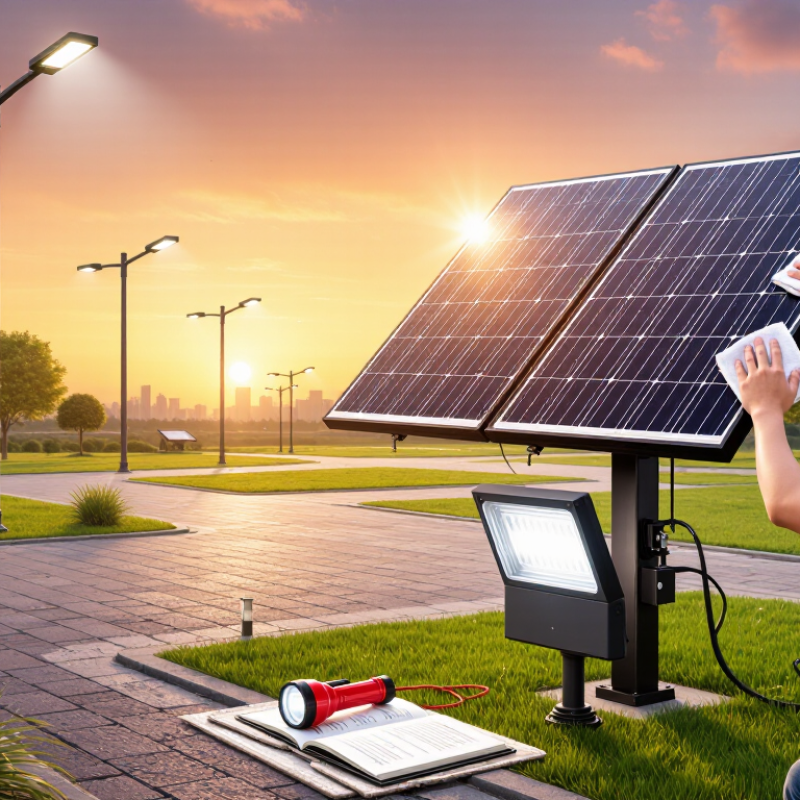
How to Maintain Solar Lighting for Long Term Use in 2026

Understand the Main Components of a Solar Lighting System

A solar light is a small power system, not just a lamp. Its photovoltaic panel converts daylight into electricity, the rechargeable battery stores it, and the charge controller manages power flow. LEDs turn that stored energy into light. Each component ages differently. Dust can reduce the panel’s exposure, while heat and repeated charging affect battery health. The controller is easy to overlook, yet it helps limit overcharging and deep discharge. Check the housing and cable seals, too. A cracked gasket may let moisture reach connectors before the fault becomes obvious.

NREL’s review of photovoltaic field studies reported a median module degradation rate of about 0.5% per year (Jordan and Kurtz, “Photovoltaic Degradation Rates—An Analytical Review,” 2013). That figure applies to PV modules, not complete outdoor lights, so it is a useful reference, not a product-life promise. The U.S. Department of Energy’s guidance on LED luminaire lifetime likewise recommends considering both light output decline and driver reliability. A bright LED alone does not prove the whole fixture is healthy. During a monthly check, wipe the panel with a soft damp cloth, inspect connectors, and compare brightness over several evenings. Shade can look like a failing battery. Maintenance plans often miss that distinction, and logs tend to be abandoned; a simple calendar reminder may be more realistic.

Clean and Inspect Solar Panels and Light Fixtures

How to Maintain Solar Lighting for Long Term Use in 2026

Keep solar panels clean before dust and pollen form a stubborn film. The IEA PVPS Task 13 report, Soiling Losses (2018), estimates average global photovoltaic energy losses from soiling at roughly 3–4%. Local conditions differ, and that figure does not predict the output of every small outdoor light.

Still, it shows why a quick panel check matters. Wipe the surface with a soft, damp cloth, then dry it gently. Avoid abrasive pads; tiny scratches can accumulate.

Inspect the light fixture at least monthly, and after heavy rain or wind. Look for cloudy lenses, cracked seals, loose fasteners, corrosion, and water droplets inside the housing. Check that branches or new plant growth do not shade the panel. Small details matter. A clean panel cannot fix a failing battery or damaged seal, so record changes in brightness and runtime too.

Use clean water and a non-abrasive cloth, following the fixture’s care instructions. Do not guess. Harsh cleaners and high-pressure sprays may damage coatings or push water past seals. Let parts dry fully before closing the housing. It is easy to over-clean; a gentle wipe is usually enough. If the light still dims after cleaning, inspect the fixture and battery rather than repeatedly scrubbing the panel.

Check Battery Health and Maintain Proper Charging

How to Maintain Solar Lighting for Long Term Use in 2026

Solar lighting depends on two things: a healthy battery and enough daylight to recharge it. Check runtime after several clear days, not just one cloudy evening. If a lamp fades early, clean the panel with a soft, damp cloth and inspect its wiring and battery contacts for dirt or corrosion. Heat matters, too. A fixture mounted beside a hot wall may age faster than one with airflow.

Separate panel performance from battery wear. In a 2012 review, NREL researchers Jordan and Kurtz reported median photovoltaic module degradation of about 0.5% per year across reviewed studies. That figure describes solar modules, not small-light batteries, but it shows why a gradual charging decline may not be obvious. A single cloudy week can mislead even a careful owner. If reduced runtime continues through sunny weather after cleaning, the battery may be losing capacity. Replace it only with a compatible type, chemistry, and rating.

Tips: Check the battery and contacts every few months. Keep the panel clear of leaves and dust. Follow the fixture’s charging instructions; battery chemistries differ. Note nighttime runtime in a simple log. It is imperfect, but comparing several weeks is more useful than guessing from one evening.

How to Maintain Solar Lighting for Long Term Use in 2026 - Check Battery Health and Maintain Proper Charging

Maintenance Area Recommended Check What to Look For Practical Action Why It Matters
Solar panel cleanliness Monthly, and after dusty storms or heavy pollen Dust, leaves, bird droppings, or other material covering the panel Wipe the panel gently with a soft damp cloth. Avoid abrasive cleaners and follow the light’s care instructions. A clean panel can receive more sunlight for charging.
Sun exposure and shade At installation and whenever nearby plants or structures change New shade from branches, fences, buildings, or seasonal growth Position the panel where it receives unobstructed daylight for as much of the day as practical. Less direct sunlight can reduce the energy available for nighttime lighting.
Battery charging performance Observe overnight runtime regularly, especially after cloudy weather Lights dimming early or running for noticeably fewer hours than usual First clean the panel and check for shade. Allow several sunny days, then compare runtime under similar conditions. Short runtime may result from limited charging, battery wear, or changing weather.
Battery condition Inspect every few months, or sooner if performance declines Corrosion, leakage, swelling, damaged wiring, or a battery that no longer holds charge Switch off the light before inspection. Replace damaged batteries only with the type and specification recommended for the unit; do not open sealed battery packs. A worn or damaged battery can reduce runtime and may create a safety risk.
Battery replacement timing Based on performance and the product instructions Persistent short runtime despite good sunlight and a clean, unobstructed panel Use the manufacturer’s guidance for battery type and replacement. Battery service life varies with chemistry, temperature, charge cycles, and use. There is no single replacement interval that applies to every solar light.
Light sensor and operating mode Check monthly if the light does not switch on or off as expected Light staying on during the day, failing to turn on at night, or an incorrect setting Clean the sensor area, check the on/off switch and mode, and consult the product instructions for a reset procedure. Correct settings and a clear sensor support normal automatic operation.
Housing, seals, and wiring Seasonally and after severe weather Cracks, loose fittings, damaged cables, or signs of moisture inside the housing Secure loose parts and replace damaged components according to the product instructions. Keep electrical connections dry. Intact housings and connections help protect outdoor components from weather exposure.
Winter or long-term storage Before storing the light for an extended period Standing water, dirt, or a battery that may be left deeply discharged Clean and dry the unit, switch it off if instructed, and follow the manual’s storage and battery-care directions. Suitable storage helps reduce avoidable wear when the light is not in use.

Note: Charging time and nighttime runtime depend on sunlight, weather, panel orientation, temperature, battery condition, and the light’s settings. Follow the product manual for battery handling and charging requirements.

Protect Wiring, Mounts, and Lights from Weather Damage

Solar lighting often fails at its connections before the light itself wears out. After heavy rain, look for cracked cable insulation, loose plugs, or water inside the battery compartment. Wipe dirt away with a soft, damp cloth, then let parts dry fully before closing the cover. Keep cable joints raised off wet soil, and avoid tight bends where wires enter a fixture. A small drip loop below the connection can help guide rainwater away. Do not seal drainage openings or alter wiring; follow the fixture’s care instructions.

Mounts need attention, too. Check screws and brackets for rust, movement, or splitting wood, especially after strong wind. Tighten loose hardware gently, since overtightening can crack plastic housings or damage a post. Clear leaves and grit from around the panel so water can drain instead of pooling. For the light, remove mud from the lens and inspect its gasket for flattening or tears. Skip pressure washers; they can force water past seals. I used to think a quick visual glance was enough. It can miss a tiny split. Make checks part of seasonal yard work, and replace damaged parts with compatible ones rather than improvising a repair.

How to Maintain Solar Lighting for Long-Term Use in 2026

Suggested preventive maintenance intervals to help protect wiring, mounts, panels, and lights from weather damage.

These are general planning intervals, not universal requirements. Inspect more often after storms or in dusty, coastal, or snowy conditions, and follow the product maker’s instructions.

Troubleshoot Performance and Replace Worn Components as Needed

Check solar lights after two clear charging days, not just one cloudy evening. Clean the panel with a damp cloth, then inspect for new shade, cracked seals, loose wires, or green corrosion around connections. A dim lamp is not automatically a bad battery. Small clues matter. Compare its runtime with a nearby working fixture, and check whether the sensor is blocked or the panel stays in shade. NREL’s review, “Photovoltaic Degradation Rates—An Analytical Review,” reported a median panel degradation rate of about 0.5% per year. That figure describes photovoltaic modules, not whole lights; a sudden drop in brightness deserves a closer inspection.

If charging checks out but runtime remains short, test the battery under load and compare its voltage with the manufacturer’s specification. Replace a swollen, leaking, or persistently weak battery with one matching the required chemistry, voltage, and capacity. Disconnect the light before servicing it, and keep moisture out of the open enclosure. Replace damaged seals and corroded connectors rather than merely wiping visible residue away. The U.S. Department of Energy’s LED lifetime guidance uses L70—the point at which output reaches 70% of its initial level—as a common measure of useful life. It is a reference, not a fixed replacement date. I’d still record the date and runtime after each repair; memory gets fuzzy.

FAQS

What are the main parts of a solar light?

A solar panel collects daylight, a rechargeable battery stores energy, and a controller manages power. LEDs produce the light.

Why might a solar light become dim?

Dust, shade, battery wear, or a failing controller can reduce brightness. Check the panel before assuming the battery is faulty.

How should I clean the solar panel?

Wipe it with a soft, damp cloth during a monthly check. Remove leaves and grit so water can drain properly.

Can shade look like a battery problem?

Yes. A nearby branch or new obstruction can reduce charging. Compare brightness over several evenings before replacing parts.

What should I inspect after heavy rain?

Look for cracked cable insulation, loose plugs, or water inside the battery compartment. Let wet parts dry fully before closing the cover.

How can I help keep rain away from cable connections?

Keep joints above wet soil and avoid sharp cable bends. A small drip loop can guide water away from a connection.

How do I check the light’s mount?

Look for rusty screws, loose brackets, or splitting wood, especially after strong winds. Tighten hardware gently; plastic housings can crack.

Can I use a pressure washer or improvise a repair?

Avoid pressure washers because they may force water past seals. Replace damaged parts with compatible ones and follow the care instructions. I sometimes miss tiny splits.

Conclusion

How To Maintain Solar Lighting For Long Term Use begins with understanding how each part of the system works, including the solar panel, battery, light fixture, wiring, and mounting hardware. Regularly remove dust, leaves, and other debris from the panel and clean the fixture so sunlight can reach the cells and the light can shine clearly. During inspections, look for cracks, loose connections, corrosion, or signs of water intrusion, and address minor issues before they affect performance.

Battery care and proper charging are also essential. Check whether the battery holds power through the night, keep the panel positioned to receive adequate sunlight, and replace a worn battery when its runtime noticeably declines. Secure wiring and mounts against wind, rain, heat, and other weather exposure. If a light becomes dim, stops working, or operates inconsistently, troubleshoot the panel, battery, connections, and fixture in a logical order. Timely repairs and replacement of worn components can help solar lighting remain dependable for years.

Isabella

Isabella

Isabella is a dedicated marketing professional with a sharp focus on driving brand growth and engagement through strategic content creation. With an extensive background in digital marketing, she combines her passion for storytelling with her keen understanding of industry trends to deliver......