Outdoor lighting plays a crucial role in enhancing the ambiance and functionality of various spaces. Whether you're illuminating a garden, patio, or pathway, the right lighting can elevate your outdoor experience. Michael Golden, an expert in outdoor lighting design, states, "How to select lighting for different outdoor environments is key to creating appealing and safe spaces."
Choosing outdoor lighting isn't always straightforward. Different environments call for unique solutions. Factors like landscape features, architectural style, and intended use must be considered. Illumination levels vary greatly from a cozy backyard to a commercial space. An effective approach involves understanding the nuances of each location.
Taking time to evaluate your specific needs pays off. Many homeowners overlook the impact of lighting on safety. Think about the visibility in dark areas. Moreover, aesthetics should not be sacrificed for functionality. By balancing these aspects, you can create inviting and practical outdoor settings. Embrace the challenge of selecting the right fixtures and techniques. After all, your outdoor spaces deserve thoughtful illumination.
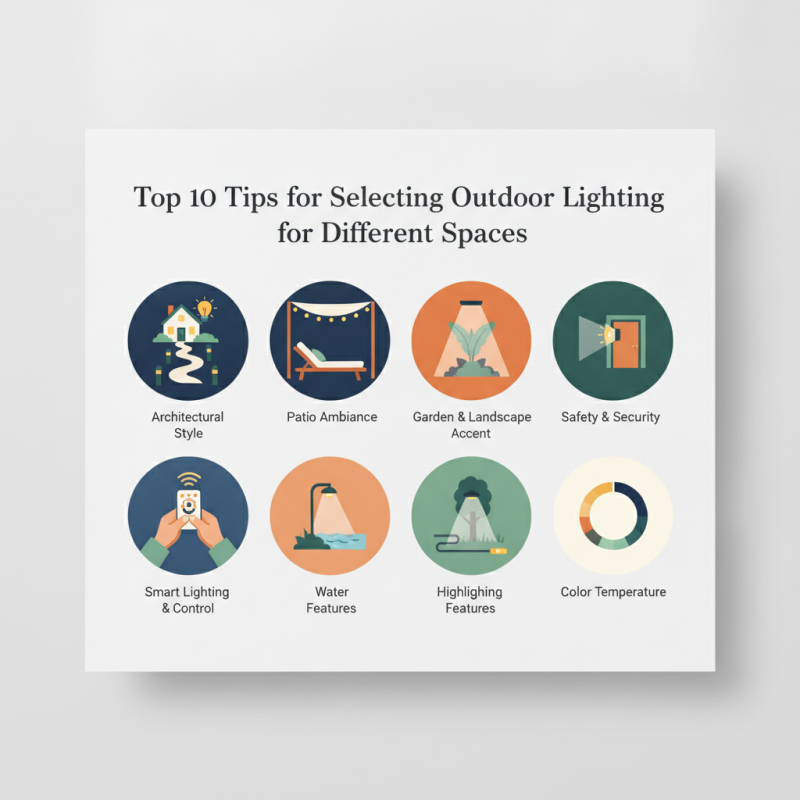
Top 10 Considerations for Outdoor Lighting Design and Planning
When designing outdoor lighting, consideration is key to achieving both functionality and aesthetics. Evaluate the specific spaces where the lights will be installed. Pathways, patios, and gardens each have unique lighting needs. For example, path lights should illuminate walkways without creating glare. Meanwhile, ambient lights on patios can foster a cozy atmosphere for gatherings.
Pay attention to the scale and style of your outdoor space. Large areas might require bold fixtures that make a statement, while smaller spaces benefit from subtle lighting. The brightness is equally important; too much can feel harsh. Adjusting the color temperature can create the desired mood. Warm lights often invite relaxation, whereas cooler lights may energize a space.
Moreover, durability and weather resistance are crucial. Outdoor fixtures face harsh elements—rain, snow, and heat. Choose materials that withstand these conditions. Reflect on installation; improper placement can lead to shadows or overly bright spots. Lastly, consider energy efficiency. LED options save energy and reduce bulb replacements. Balancing these factors can enhance your outdoor experience, ensuring safety and style.
Understanding the Different Types of Outdoor Lighting Solutions Available
Choosing the right outdoor lighting can transform your space. There are various types of outdoor lighting solutions available. Each serves a unique purpose. Understanding their functions is key to making the best choice.
Path lighting enhances safety and guides the way through your garden. Fixtures can be solar-powered or wired, which can impact maintenance costs. A report from the American Lighting Association suggests that proper path lighting reduces accidents by 40%. For ambient lighting, consider wall sconces or lanterns. These sources create a warm atmosphere, perfect for gatherings.
When selecting lighting, think about energy efficiency. LED options are becoming increasingly popular. They consume less energy and last longer, making them cost-effective. An effective tip is to combine different lighting types. Highlight your landscaping while ensuring safety and ambiance. This layered approach can create a visually appealing space.
Consider the height and placement of fixtures as well. Oversized lights can overpower small spaces. In contrast, low-lying lights may not provide sufficient brightness. Getting this balance right is crucial for an inviting outdoor area. Remember, misuse of lighting can lead to dark spots or harsh glare, which detracts from the overall experience.
Evaluating Lumens: How Brightness Affects Different Outdoor Spaces
When selecting outdoor lighting, understanding lumens is crucial. Lumens measure brightness. Different outdoor spaces require varying brightness levels. Pathways may need 100 to 200 lumens per fixture for safety. This ensures visibility during nighttime walks. Conversely, a patio or entertainment area often requires 300 to 500 lumens. This level creates a welcoming atmosphere.
Consider the purpose of your lighting. Dim lighting may be suitable for relaxation areas, while brighter options may help with tasks or safety. Be cautious of over-lighting; it can create glare and discomfort. Conversely, insufficient lighting can lead to accidents. Balance is key.
Evaluate the height and placement of fixtures. Higher placements often dilute brightness. However, lower lights can create shadows that obscure visibility. Reflect on your specific needs. Lighting should enhance beauty, security, and functionality. Each space tells a different story through light, but achieving the right balance requires thought and careful planning.
Evaluating Lumens: Brightness Levels for Outdoor Spaces
Selecting the Right Color Temperature for Ambiance and Functionality
When selecting outdoor lighting, the right color temperature plays a crucial role in creating ambiance. Color temperature is measured in Kelvin (K). For cozy settings, a warm white light at 2700K is ideal. According to the Lighting Research Center, warmer colors enhance feelings of comfort and relaxation. For spaces like patios or gardens, staying within this range fosters an inviting atmosphere.
In contrast, cooler temperatures around 4000K to 5000K better serve functional spaces. These lights mimic daylight, enhancing visibility for outdoor activities. A study by the American Society of Interior Designers highlights that cooler lights improve concentration and alertness, making them suitable for workspaces. However, using lights that are too harsh can create an unwelcoming environment. Balancing brightness and warmth is essential.
It's also vital to consider how different surfaces reflect light. For instance, dark surfaces absorb more light, making warm tones less effective. Reflective surfaces, however, amplify brightness. As you select your outdoor lighting, think about the space's use. Ambient lighting is meant to be soft and inviting, while task lighting needs to be brighter for clarity and safety. Striking this balance may take some experimentation, but your outdoor space will thank you for it.
Energy Efficiency Metrics: Choosing Sustainable Outdoor Lighting Options
When selecting outdoor lighting, energy efficiency is crucial. According to the U.S. Department of Energy, LED lights consume at least 75% less energy than traditional incandescent bulbs. This statistic emphasizes the importance of choosing sustainable options that lower energy bills and reduce carbon footprints. Utilizing solar-powered lights can further enhance efficiency. They harness sunlight during the day and illuminate spaces at night without drawing from the electrical grid.
One tip for efficient outdoor lighting is to incorporate motion sensors. These devices activate lights only when needed, promoting energy savings. Another suggestion involves using timers. Timers can turn lights on and off at preset times, ensuring lights are not left on unnecessarily. The right lighting can transform an outdoor space while still prioritizing energy efficiency.
Consider the placement of fixtures. Well-placed lights can minimize energy waste by illuminating necessary areas without over-lighting. For areas that require constant lighting, such as pathways, opt for lights with high energy ratings. This will ensure they provide consistent illumination while conserving energy. Remember, balancing aesthetics with energy-efficient solutions can lead to both beauty and sustainability.
Top 10 Tips for Selecting Outdoor Lighting for Different Spaces
| Space Type |
Recommended Lighting Type |
Energy Efficiency Rating |
Sustainability Features |
Average Lumen Output |
| Garden |
LED Path Lights |
A+ |
Solar-powered |
100-200 lumens |
| Patio |
String Lights |
A |
Energy Star rated |
150-300 lumens |
| Driveway |
LED Flood Lights |
A+ |
Dusk-to-dawn sensors |
800-1200 lumens |
| Front Door |
Wall Sconces |
A |
LED bulb compatible |
200-400 lumens |
| Deck |
Recessed Lighting |
A+ |
Low voltage |
300-600 lumens |
| Pool Area |
Underwater Lights |
A+ |
Energy efficient LEDs |
500-1000 lumens |
| Walkways |
Post Lights |
A |
Solar-powered options |
100-150 lumens |
| Security Areas |
Motion Sensor Lights |
A+ |
Smart features |
800-1500 lumens |
| Garden Path |
Solar Path Lights |
A+ |
No wiring required |
70-150 lumens |
| Outdoor Dining |
Hanging Pendant Lights |
A |
Dimmable |
300-600 lumens |
Conclusion
In the article "Top 10 Tips for Selecting Outdoor Lighting for Different Spaces," essential guidelines are discussed to aid homeowners in making informed decisions on outdoor lighting design and planning. Key considerations include understanding the variety of outdoor lighting solutions available, which can significantly enhance both aesthetic appeal and functionality. Evaluating lumens is crucial, as brightness affects how well different outdoor spaces serve their intended purposes, from safety to ambiance.
Moreover, selecting the right color temperature can create a warm inviting atmosphere or a crisp, modern look, depending on the desired effect. The article also emphasizes the importance of energy efficiency metrics, encouraging readers to choose sustainable lighting options that not only save energy but also benefit the environment. Ultimately, learning "How To Select Lighting For Different Outdoor Environments" equips individuals with the knowledge to elevate their outdoor spaces while being mindful of energy consumption.

 SWF Lights