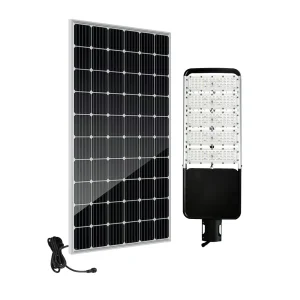
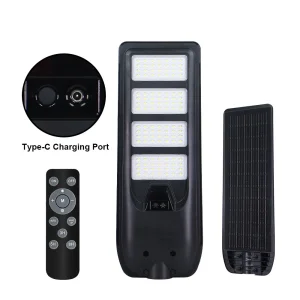
Our top-tier integrated photovoltaic solar motion lights configured specifically for commercial avenues and municipal infrastructure in West Central Africa.
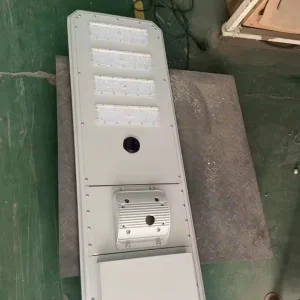
Equatorial Guinea, consisting of the mainland Rio Muni and Bioko Island, experiences a tropical monsoon climate characterized by elevated relative humidity, heavy seasonal precipitation, and high average ambient temperatures. Historically, public lighting systems in major municipal hubs like Malabo, Bata, and Ebebiyín have relied heavily on centralized grids powered by natural gas turbines or expensive, maintenance-intensive diesel generator grids.
As the state advances its industrial modernization goals and aligns with global climate targets, a major bottleneck has emerged: transmission losses in rural sub-regions and constant grid instability due to heavy maritime weather. High-capacity solar motion lights have shifted from a green alternative to an absolute infrastructural necessity. By bypassing centralized distribution networks, self-contained solar luminaires eliminate transmission loss and fuel supply vulnerabilities.
In typical equatorial coastal zones, ambient salt-spray creates a highly corrosive environment. Standard street lighting luminaires decay rapidly, experiencing premature circuit board failure, battery swelling, and polycarbonate clouding. This whitepaper details how engineered solar motion lights, optimized with high-grade anodized aluminum housings, Lithium Iron Phosphate (LiFePO4) chemistry, and intelligent power management algorithms, present the only viable, long-term illumination pathway for the region.
Traditional lithium batteries degrade at 35°C+. SWF Lights implements custom-packed LiFePO4 cells with thermal isolation barriers capable of operating up to 65°C without capacity degradation.
Constructed with dual-chamber silicone gaskets, IP66-IP67 ingress ratings, and hydrophobic venting valves to prevent water condensation inside optical lenses.
Proprietary algorithms compute battery health, state-of-charge, and historical weather patterns to automatically adjust dynamic LED output, ensuring 365-night operation.
The global demand for commercial-grade solar lighting systems has experienced a compound annual growth rate (CAGR) of over 18% in the last five years. While domestic policies in European and North American markets prioritize carbon neutrality, emerging markets in Africa seek solar integration as a primary infrastructural cost-containment strategy.
Within this global framework, China’s industrial ecosystem remains the undisputed leader in solar motion light production. China’s supply chain integrates everything from quartz mining and solar cell fabrication to advanced computerized surface mount technology (CSMT) and heavy-duty aluminum die-casting. This tight regional aggregation reduces lead times and minimizes trans-shipment logistics costs.
Wuxi SWF Lights Co., Ltd., established in 2017 in Wuxi, China, exemplifies this production efficiency. Operating 13 large-scale integrated production bases, Wuxi SWF Lights retains absolute control over the entire solar street light value chain. Unlike assembly-only operations, we oversee mold processing, design and development of LED lenses, lithium battery pack assembly, solar panel lamination, and automated CSMT electronic assembly.
By maintaining vertical integration, SWF Lights reduces standard factory lead times to within 15 workdays, even during peak production seasons. We can design, modify, and optimize custom lighting systems for localized markets such as Equatorial Guinea without relying on secondary suppliers, guaranteeing exceptional build consistency and long-term supply reliability.
How Wuxi SWF Lights supports regional infrastructure and global distributors.
Optimized with high-density lithium storage cells and intelligent microwave motion sensors to extend battery preservation through long rain seasons.
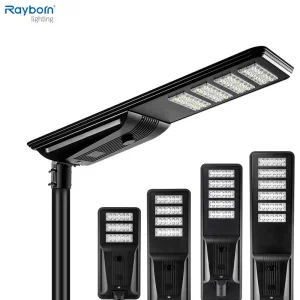
Selecting a solar motion light model requires matching device specifications with local environmental conditions. In Equatorial Guinea, our products are deployed across three primary scenarios:
The ports of Malabo and Bata experience continuous exposure to marine aerosols containing highly corrosive sodium chloride (NaCl). Standard powder coatings peel within months, leading to structural base failures.
SWF Lights addresses this issue with marine-grade AL6063-T5 aluminum alloy, treated with high-micron anodization and a polyester anti-corrosion coating. Combined with 316 stainless steel fasteners, our assemblies withstand intensive salt spray tests, maintaining mechanical and aesthetic integrity over a 10-year lifespan.
In inland municipal locations like Mongomo and Evinayong, extending the national grid is often economically unfeasible. Communities rely on micro energy storage systems for basic safety and security.
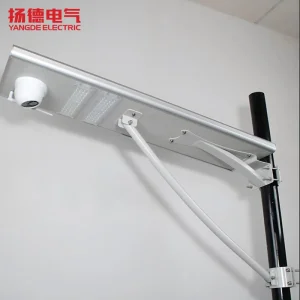
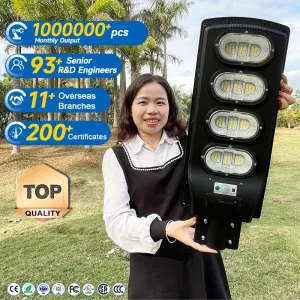
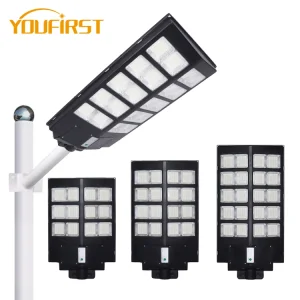
Installing our All-in-One and All-in-Two solar street lights equipped with integrated microwave motion sensors allows communities to maintain light levels when pedestrian or vehicle traffic is detected, dimming to a 20% standby mode during quiet hours to conserve battery life.
The petrochemical complex on the Punta Europa peninsula in Bioko Island requires continuous, explosion-resistant perimeter security lighting. Traditional electrical conduits pose spark risks and require expensive explosion-proof cabling.
Self-powered solar lighting eliminates the need for trenching and high-voltage underground cables. Our systems operate independently, isolating any electrical faults to the individual unit and preventing cascading outages across critical facilities.
Tropical zones present distinct challenges for photovoltaic modules. High cloud cover during the rainy season limits direct sunlight, and elevated temperatures lower the output efficiency of monocrystalline solar panels.
SWF Lights addresses these issues by using high-efficiency monocrystalline cells with conversion rates exceeding 22.5%. Combined with maximum power point tracking (MPPT) controllers, these panels capture diffused light on overcast days, optimizing charging currents under low-light conditions.
Additionally, our high-power models feature integrated, customized heat sinks. Airflow pathways molded directly into the light housing dissipate heat away from the LED array and battery compartment, maintaining operating temperatures within safe limits and extending the lifespan of critical components.
| Technology Vector | Standard Market Offerings | SWF Lights Industrial Solutions | Equatorial Guinea Climate Impact |
|---|---|---|---|
| Battery Chemistry | Ternary Lithium / Lead-Acid | Premium LiFePO4 (Grade A) | Prevents thermal runaway and capacities loss at >35°C ambient temperatures. |
| Controller Tech | Standard Pulse Width Modulation (PWM) | Dynamic MPPT (99.2% tracking speed) | Maintains up to 30% higher charging rates during overcast/cloudy monsoon periods. |
| Enclosure Metal | Recycled ABS Plastic / Thin Steel | Anodized Marine AL6063-T5 Alloy | Withstands salt-spray corrosion along the coastlines of Malabo and Bata. |
| Luminous Efficiency | 100 lm/W to 130 lm/W | Up to 200 lm/W (High-performance LEDs) | Delivers higher lumens per watt to conserve battery capacity during long winter nights. |
| Sensor Technology | PIR Heat-based Motion Detectors | Microwave Doppler Radar (12m range) | Avoids false triggers caused by high-humidity heat signatures and tropical storms. |
Formally established in 2017, Wuxi SWF Lights has grown over the past eight years into an integrated supplier of micro energy storage systems and solar lighting solutions.
Our in-house capabilities span the entire manufacturing lifecycle, including product design, mold processing, lithium-ion pack assembly, solar panel production, and automated CSMT component mounting. This comprehensive control allows us to deliver high-quality, customized products that meet the demanding requirements of municipal and industrial projects.
Business Type:
Manufacturer & Exporter
Registered Capital:
$1.3 Million USD
Year Established:
2017
Certifications:
CE, RoHS, FDA, ISO9001
Product Portfolio:
Solar Street Lights, Batteries, Solar Inverters, PV Panels
Trade Capability:
FOB, CIF (Malabo/Bata Port)
Annual Sales:
$5M - $10M USD
Export Ratio:
31% - 40% Worldwide
Explore our full range of solar motion lighting solutions, optimized for durability and efficiency in tropical environments.
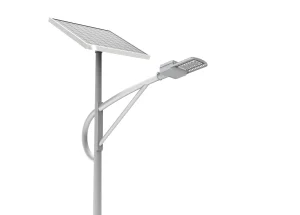
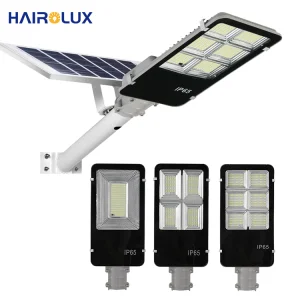
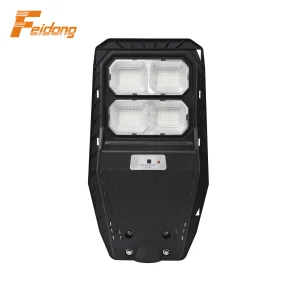
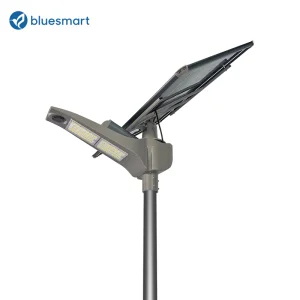
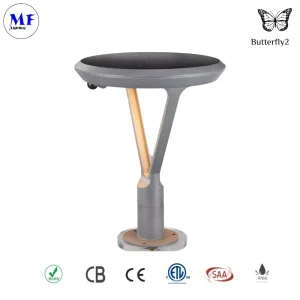
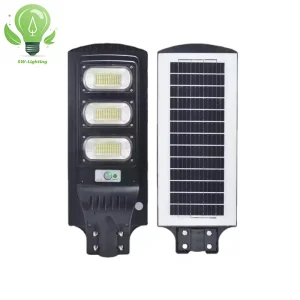
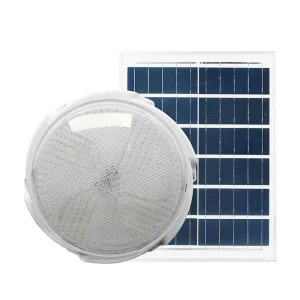
Technical support, procurement logistics, and performance specifications for international solar projects.
Our solar lights are engineered to maintain operational stability during extended rainy periods. We configure our systems with a high-capacity solar-to-battery ratio (over-sizing the solar panel and LiFePO4 storage capacity relative to the LED draw) and implement intelligent MPPT controllers.
When charging current is low, the system automatically adjusts the LED power output using motion-sensor triggers. In standby mode (no motion), the light dims to 20% brightness, saving power to ensure the battery can sustain the light through multiple cloudy or rainy days.
We use high-grade AL6063-T5 aluminum alloy for our structural enclosures, which is treated with a specialized electrophoretic multi-layer powder coating. This prevents oxidation and corrosion from salt spray. All exposed fasteners and brackets are made of marine-grade 304 or 316 stainless steel to ensure long-term durability in coastal environments.
Lithium Iron Phosphate (LiFePO4) offers excellent thermal stability, with a thermal runaway threshold of approximately 60°C. Standard lithium-ion batteries can experience degradation and swelling at temperatures above 35°C.
LiFePO4 also delivers a longer cycle life, providing 3,000 to 5,000 charge cycles compared to the 500 to 1,000 cycles typical of standard lithium-ion batteries. This makes it a more cost-effective and reliable choice for tropical regions.
Our standard production lead time is 15 workdays from order confirmation to port delivery. Maritime transit times from Chinese ports to West African ports typically range from 35 to 45 days. We coordinate all logistics, documentation, and export clearance through experienced shipping partners to ensure smooth delivery.
Yes, we provide full OEM and ODM customization services. Because we manufacture our own components, we can tailor the system's power ratings, battery capacities, and controller programming to meet the specific requirements of public tenders and development projects.
Have specific project requirements or need a customized quote?
Contact Our Engineering Team SWF Lights