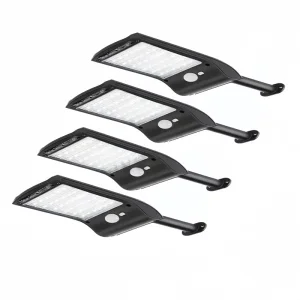
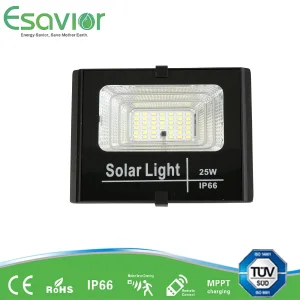
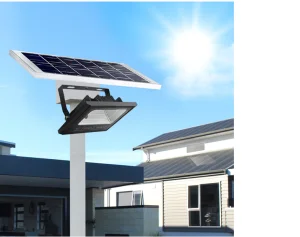
High-efficiency, rugged outdoor solar security systems pre-calibrated for the unique sub-Saharan equatorial climates.
The Democratic Republic of the Congo (DR Congo) possesses one of the richest mineral resource basins in the world. However, the domestic electrical infrastructure remains highly undeveloped. While major mining zones in provinces like Katanga and Lualaba drive massive economic gains, they are continually bottlenecked by power supply instability and remote geographical placement.
In urban epicenters like Kinshasa, Lubumbashi, and Kisangani, grid outages are persistent, leaving public arenas, warehousing facilities, and industrial complexes in darkness. In this context, relying on grid-connected security lighting is a significant operational vulnerability. Security vulnerabilities escalate exponentially during power outages. Solar security lights, therefore, are not merely eco-friendly additions; they are vital, stand-alone components of national and private security infrastructures.
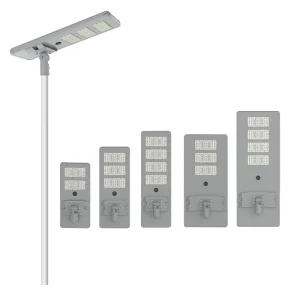
Operating completely independent of the Société Nationale d'Électricité (SNEL) grid, ensuring 100% security uptime during blackouts.
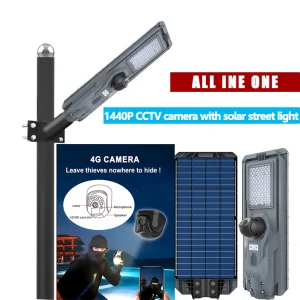
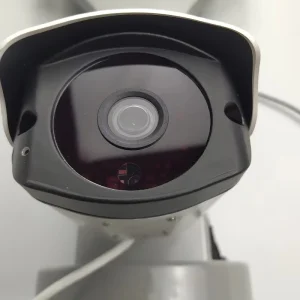
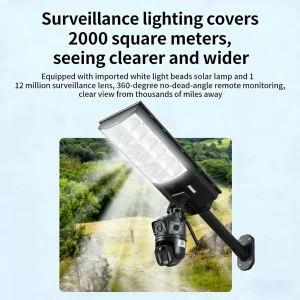
Integrating microwave motion radars and UHD visual sensors to active detect and deter unauthorized personnel at commercial perimeters.
Eliminating cable trenching, commercial substation distribution, and monthly utility expenses in remote industrial deployments.
Furthermore, the geographical location of DR Congo along the equator yields a massive competitive advantage: consistent solar irradiance. The country receives an average of 5 to 6 kWh/m²/day of solar insolation. By utilizing monocrystalline solar technologies and industrial-grade energy storage systems, global and local firms can build a robust security shield that remains fully operational 365 days a year.
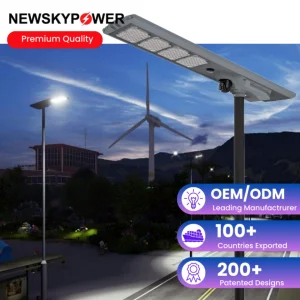
Equipped with 4G/LTE cellular modules, high-definition IP cameras, and smart telemetry systems.
Developing and sourcing solar luminaires for Central African environments requires a departure from general-purpose consumer grade electronics. Factors such as red-clay dust precipitation (laterite), tropical cloud cover, torrential rains, and ambient daytime temperatures exceeding 40°C present severe thermal and mechanical stresses to hardware.
Traditional lead-acid and standard ternary lithium batteries degrade rapidly when subjected to high ambient thermal environments. Modern industrial units are built around Lithium Iron Phosphate (LiFePO4) chemistry. LiFePO4 cells support over 3,000 to 5,000 charge cycles at 80% Depth of Discharge (DoD) and can withstand operating temperatures of up to 60°C without risk of thermal runaway. This guarantees a lifetime profile exceeding 8 to 10 years in Congolese territories.
Diffuse sunlight during the rainy season in DR Congo demands highly responsive solar cells. Monocrystalline PERC (Passivated Emitter and Rear Cell) panels offer an electrical conversion rate of up to 22-23.5%, maintaining operational efficiency in low-light, cloudy conditions, far outperforming older polycrystalline alternatives.
| Technical Component | Standard Specification | Industrial Grade (SWF Lights Standard) | DR Congo Operational Benefit |
|---|---|---|---|
| Battery Chemistry | Ternary Li-ion (NMC) | Lithium Iron Phosphate (LiFePO4) | Extends lifespan up to 8 years, avoids heat-induced swelling |
| PV Panel Class | Polycrystalline (15% efficiency) | A-Grade Monocrystalline PERC (22.5%) | Ensures battery replenishment under thick equatorial cloud cover |
| Ingress Protection | IP65 (Dust & Splash Proof) | IP68 (Hermetically Sealed Engine) | Prevents moisture damage from torrential tropical storms |
| Smart Telemetry | None / Standard PIR | 4G LTE / Wi-Fi IoT CCTV Motion Tracking | Enables remote industrial yard supervision via web console |
A high-performance Maximum Power Point Tracking (MPPT) controller tracking algorithm maximizes energy extraction from the solar panel by dynamically adjusting the electrical operating point. In humid tropical environments, MPPT increases total system efficiency by 15% to 30% compared to Pulse Width Modulation (PWM) systems.
Security demands change dynamically based on the exact industrial sector and site layout. Standard solutions fail when deployed in critical environments. Here is how specialized setups cater to individual key markets:
Mining perimeters in areas such as Likasi or Kolwezi contain raw commodities worth millions of dollars. These facilities deploy remote perimeter security light poles integrated with 4G CCTV systems. They act as autonomous watchtowers, streaming real-time security logs back to central security rooms in Lubumbashi or globally via satellite backhaul.
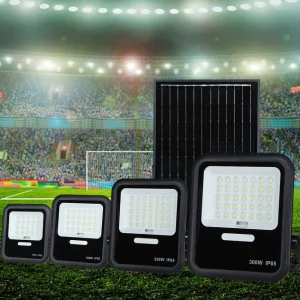
Logistics centers along the Congo River in Matadi and Boma need consistent illumination to safely operate loading bays around the clock. By using high-power, IP68 rated solar floodlights, shipping hubs can maintain round-the-clock freight operations even during localized grid blackouts, protecting both valuable assets and worker safety.
Wuxi SWF Lights Co., Ltd., established in 2017, has grown into a premier developer and OEM/ODM supplier of off-grid solar equipment. Specializing in micro energy storage systems, high-efficiency solar garden and street lights, SWF Lights serves the developing energy landscapes of Africa and Southeast Asia. The company continues to deliver on its promise to supply robust, affordable power solutions to regions with unreliable or costly grid electricity.
The cost of localized equipment failures in remote regions of DR Congo is extremely high, with repair logistics requiring massive lead times. High hardware quality starts at the manufacturing stage. SWF Lights relies on advanced Factory 4.0 principles to deliver reliable, long-lasting products:
Clearing customs and ensuring regulatory alignment for industrial solar imports to DR Congo requires complete, verified documentation. Cargo arriving at the Port of Matadi or transit points like Mombasa or Dar es Salaam must meet the following international standards:
All industrial imports must be backed by an Office Congolais de Contrôle (OCC) certificate of conformity. Products supplied by Wuxi SWF Lights are certified with CE, RoHS, and select certifications, ensuring smooth customs processing and hassle-free imports.
We offer multiple Incoterms including Free On Board (FOB) and Cost, Insurance, and Freight (CIF) shipping. For mining hubs located in the southern regions of the country, overland transport routes via Durban, South Africa, or Dar es Salaam, Tanzania, provide reliable delivery pathways for containerized systems.
Evaluating solar security lighting based purely on initial CAPEX can lead to poor long-term procurement choices. Cheap low-end consumer systems often suffer from premature battery degradation and circuit failures within their first 12 months, resulting in high maintenance costs in remote locations.
Investing in industrial-grade systems from SWF Lights saves money over time. By eliminating maintenance visits and avoiding replacement costs for 8 to 10 years, these systems deliver a fast, reliable return on investment.
Rugged, long-lasting lighting systems engineered for continuous operation in challenging environments.
Technical answers to help engineers and procurement teams select the right hardware configurations.
Continuous investment in clean energy technology, quality testing, and scalable automation systems.
Ready to optimize your facility security with industrial-grade solar security solutions?
Request Quotation & Technical Proposal SWF Lights